Honeycomb shades, explained
How honeycomb shades work — and how to choose
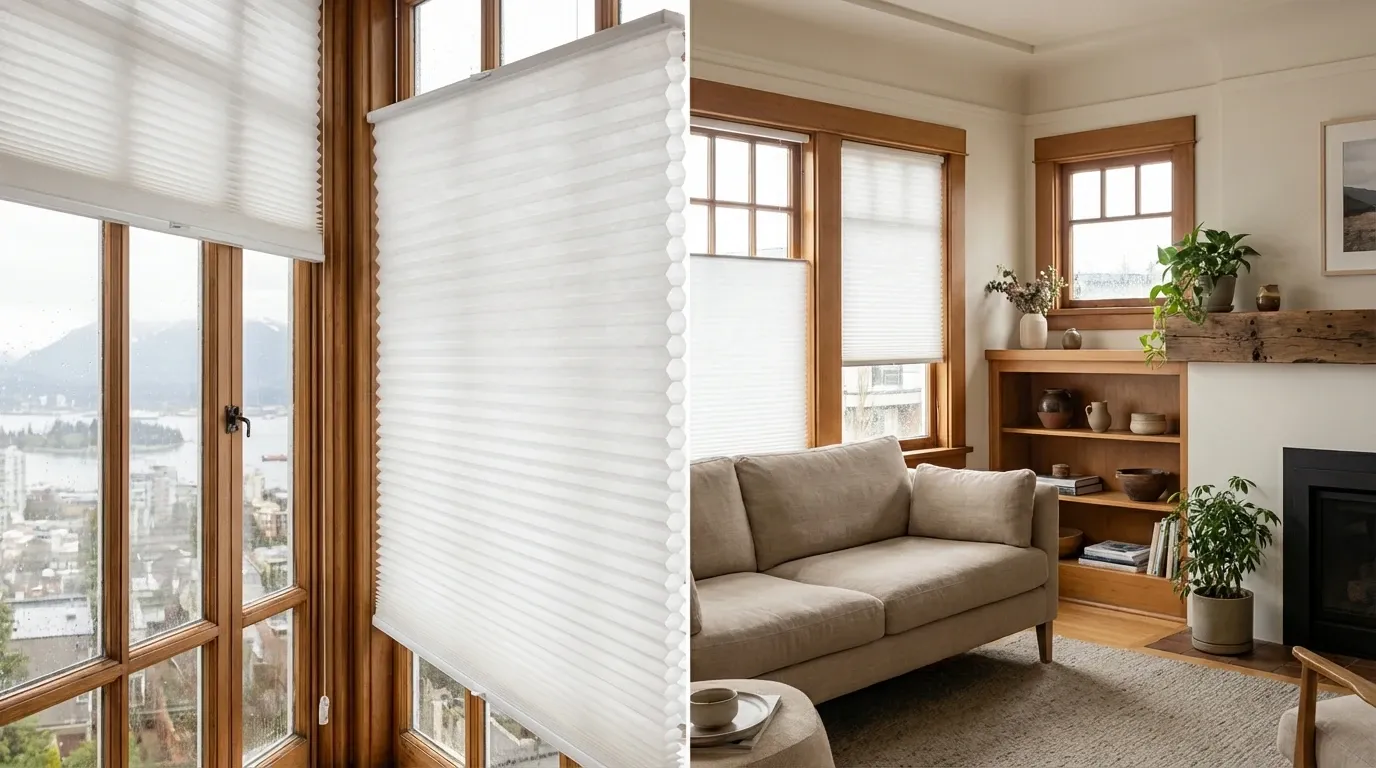
A honeycomb shade is made from pleated fabric that folds into rows of hexagonal cells — the honeycomb cross-section that gives the product its name. Lower the shade and those cells trap a layer of still air between the glass and the room. That air layer is the point: it slows heat transfer, so rooms stay cooler in summer and hold warmth in winter. Single-cell construction gives you one layer of pockets and a clean, slim profile; double-cell stacks two layers for stronger thermal and acoustic performance and a slightly deeper shade body.
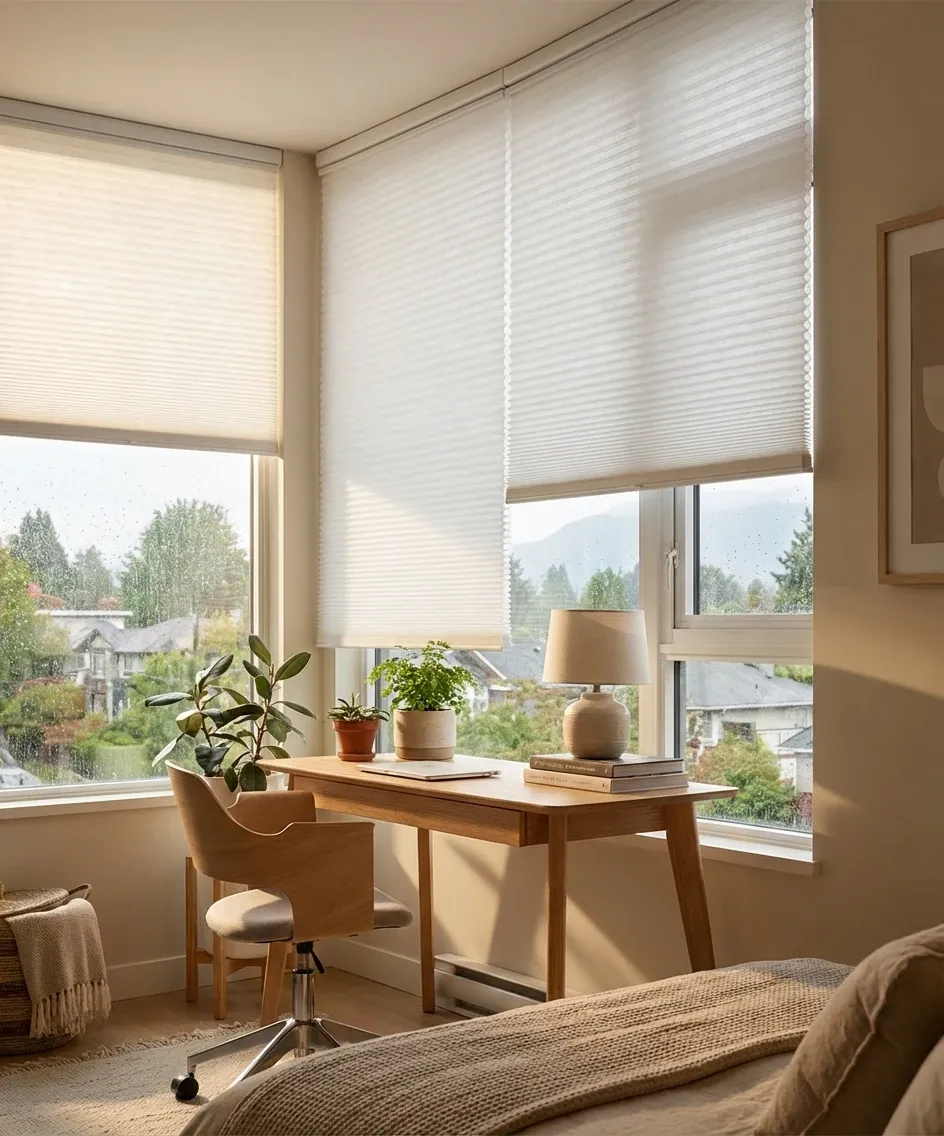
The same air pockets that insulate also absorb sound. Honeycomb shades dampen outside noise more effectively than any other shade type — useful for condos on busy streets, bedrooms above traffic, and rooms facing construction. They won't replace an acoustic upgrade or a new window, but the comfort difference is real, and homeowners consistently notice it on older or single-pane glass.
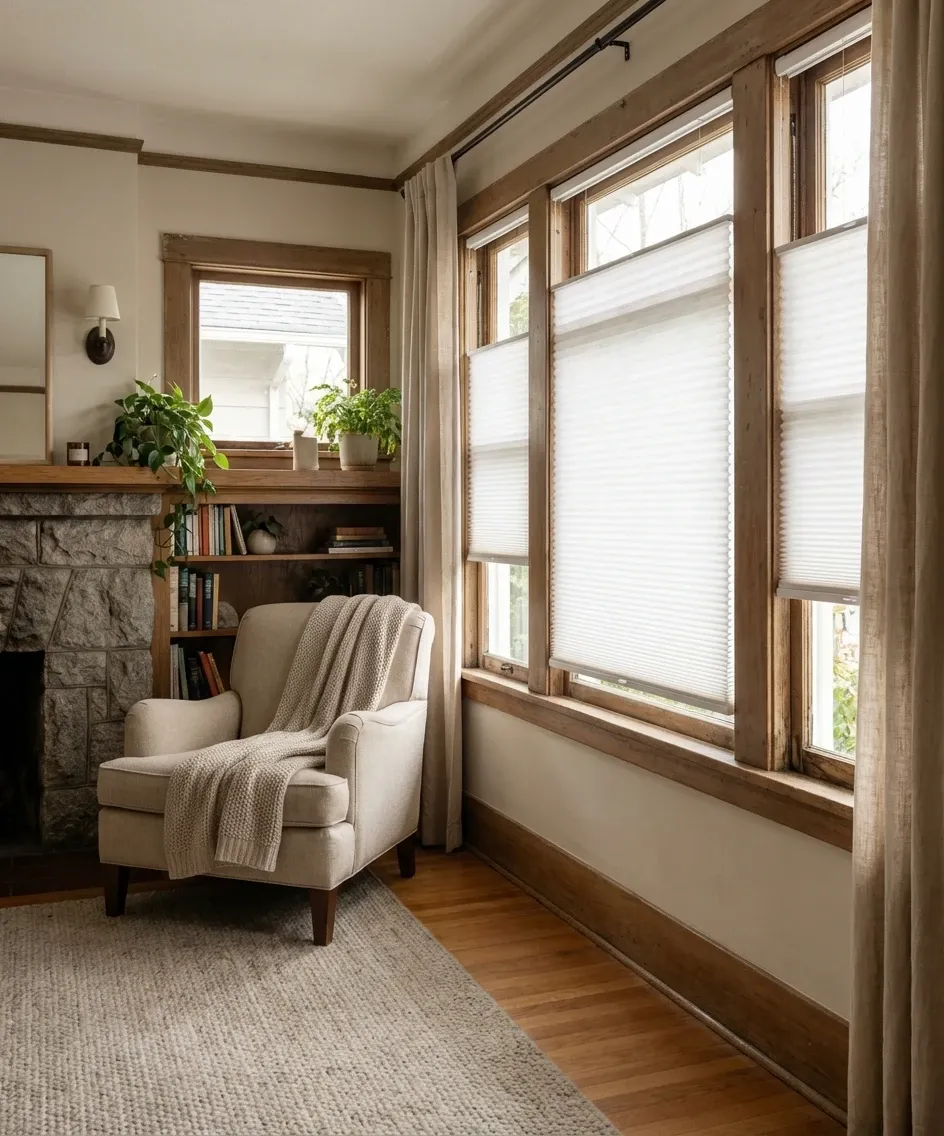
Light control comes from the fabric. Sheer diffuses daylight for an open, airy room. Light-filtering softens daylight and cuts glare while keeping the space bright. Room-darkening blocks most light for sleep and privacy. A two-fabric combination pairs a sheer or light-filtering top with a room-darkening bottom in one shade — daylight from above and darkness below, set with top-down/bottom-up control. That control is the honeycomb signature: both rails move independently, so you can lower the top for light while keeping the bottom closed for privacy — exactly what street-facing windows, bathrooms, and living rooms need as the day changes.
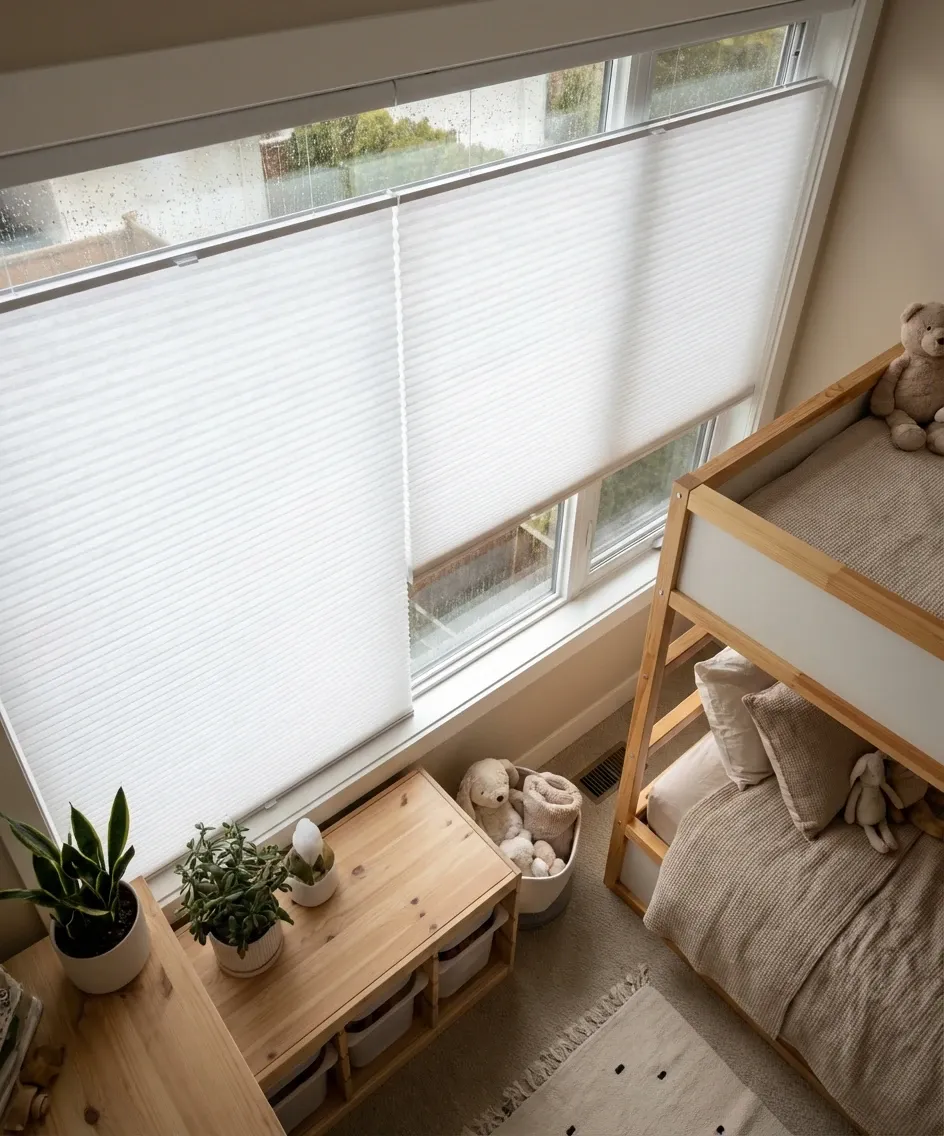
Choosing between honeycomb shades and roller shades? Roller shades — the product most Vancouver homes start with — offer the widest fabric range, including solar screens that preserve an outward view, plus a sleeker profile and more hardware options. Honeycomb shades give you something roller shades can’t: a genuine insulating air layer, real sound dampening, and top-down/bottom-up control. For bedrooms, nurseries, and rooms that run too hot or too cold, honeycomb is the stronger choice. For a living room where the view comes first, a solar roller shade preserves it better. Many homes use both — honeycomb where comfort and quiet matter, roller shades where the view and fabric variety lead.
Match the cell to the room. Single-cell suits standard windows where a clean profile and good insulation are enough; double-cell earns its place in bedrooms, nurseries, and any room facing a busy street or temperature extremes. As a local manufacturer of cellular shades, we control the whole process — from build to final installation — so condo, townhouse, and new-build projects across Metro Vancouver get one accountable result.