Built locally in Vancouver
We manufacture your blackout shades ourselves — fabric cut, hardware matched, shades assembled. Custom-fit to your windows, not pulled from stock sizes.
About HT Blinds BLINDS
 Blackout fabric blocks the light. Sealed hardware closes the edges. Together they make a room actually dark — for bedrooms, nurseries, and media rooms.
Built locally in Vancouver and installed by our crew. Motorization available for hands-free, scheduled darkness. Backed by the HT Worry-Free Warranty.
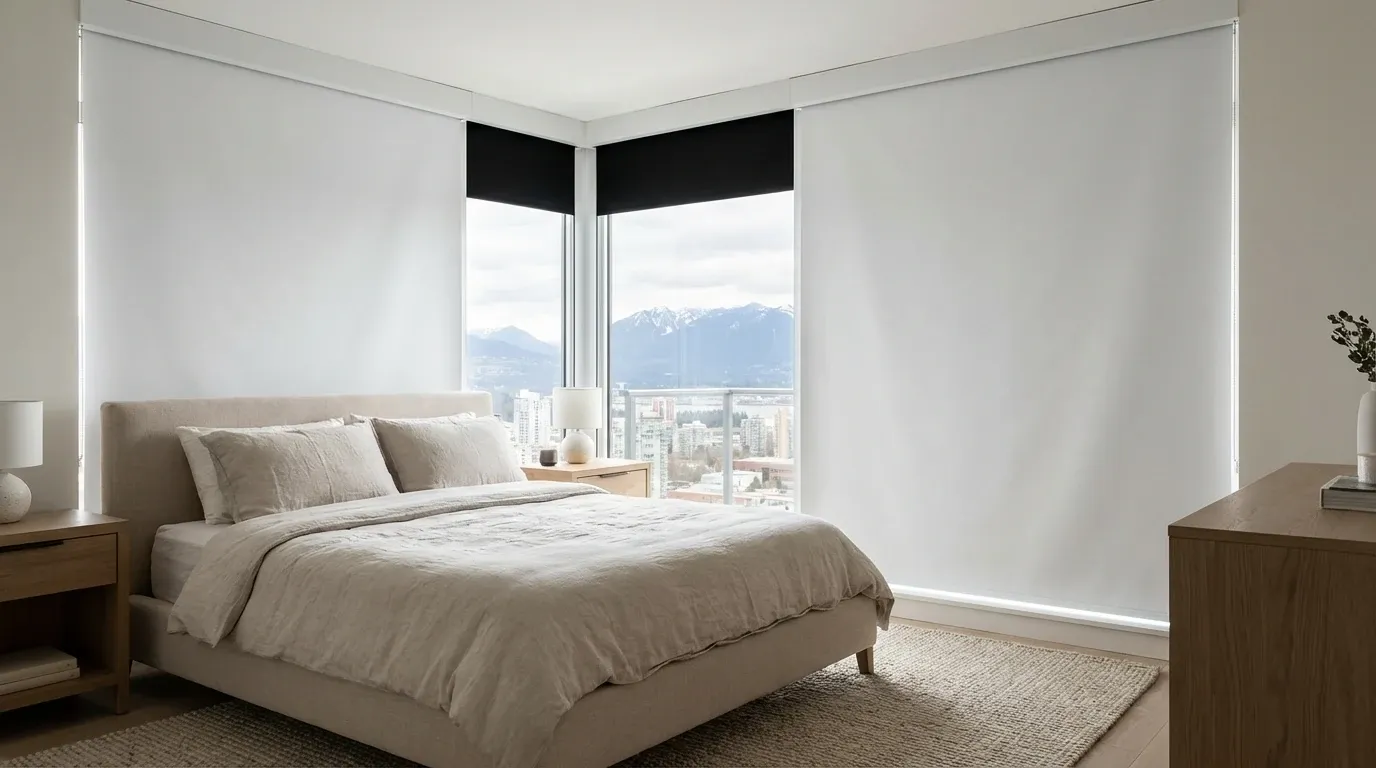
HT Blinds is Vancouver's factory-direct window coverings manufacturer. We build blackout shade systems for the rooms that need real darkness — primary bedrooms, nurseries, home theatres, and hotel guestrooms. Fabric, hardware, and mounting are engineered together and installed by the same team that builds them. No middlemen. No markup. No handoffs.
We manufacture your blackout shades ourselves — fabric cut, hardware matched, shades assembled. Custom-fit to your windows, not pulled from stock sizes.
About HT BlindsThe crew that builds your shades installs them. One call, one team, one result you can hold us to.
Every shade ships with the HT Worry-Free Warranty — fabric, hardware, and motors. Built local. Backed for life.
No stock sizes. Every shade is cut to your opening so the seals actually seal — the difference between dark enough and truly dark.
Opaque fabric is the base layer of a blackout system — it blocks light through the material. Clean and modern, in a full colour range. On its own it still leaves edge gaps, which is what the hardware below is for.
Opaque fabric that blocks light through the material — the base layer of a true blackout system. Clean, modern, and available across a full colour range. Built for bedrooms, nurseries, and media rooms.
This is the part most "blackout" shades skip. Fabric blocks light through the middle; hardware closes the perimeter. Side channels seal the sides, a cassette or fascia covers the roller and the gap above it, and a sealed bottomrail closes the bottom edge.
Aluminum channels run down both edges of the window and close the gap blackout fabric can't cover on its own. Paired with blackout fabric, they also add a little insulation.
A contoured cassette with a matching fabric insert that hides the roller and the gap above it. Clean, finished, and especially sharp in modern rooms.
A flat top treatment that covers the roller and closes the light gap above the shade. White, Black, or Anodized Silver. 3" or 4".
A PVC light block that closes the edge gap to cut light and add privacy. Inside mount, five colours.
Closes the bottom edge — the last gap a standard shade leaves open. Hem bar, slim bar, or fabric-insert bar.
Blackout shades pair naturally with motorization — automated schedules matter most in rooms where darkness is tied to sleep. Set them to close at bedtime and open in the morning without touching a cord.
Precise, clutch-controlled positioning on a continuous chain. The Chain Guard shroud keeps it clean and child-safe.
Cord-free operation with a gentle pull. A minimal look and an easy, safe choice for bedrooms.
Rechargeable, wire-free motorization — smooth and quiet. Control by remote, app, or voice for scheduled, hands-free darkness.
Premium automation with the widest range of integration. Pairs with leading smart-home systems for reliable schedules and scenes.
Bedrooms, nurseries, home theatres, and hospitality guestrooms across Metro Vancouver — Vancouver, Burnaby, the North Shore and beyond. Burnaby homeowners often ask us for blackout roller blinds on street-facing bedrooms; the same full-system build handles them. Side channels, light-block hardware, and motorized systems, installed and performing. The difference between fabric-only blackout and full-system blackout, in real rooms.
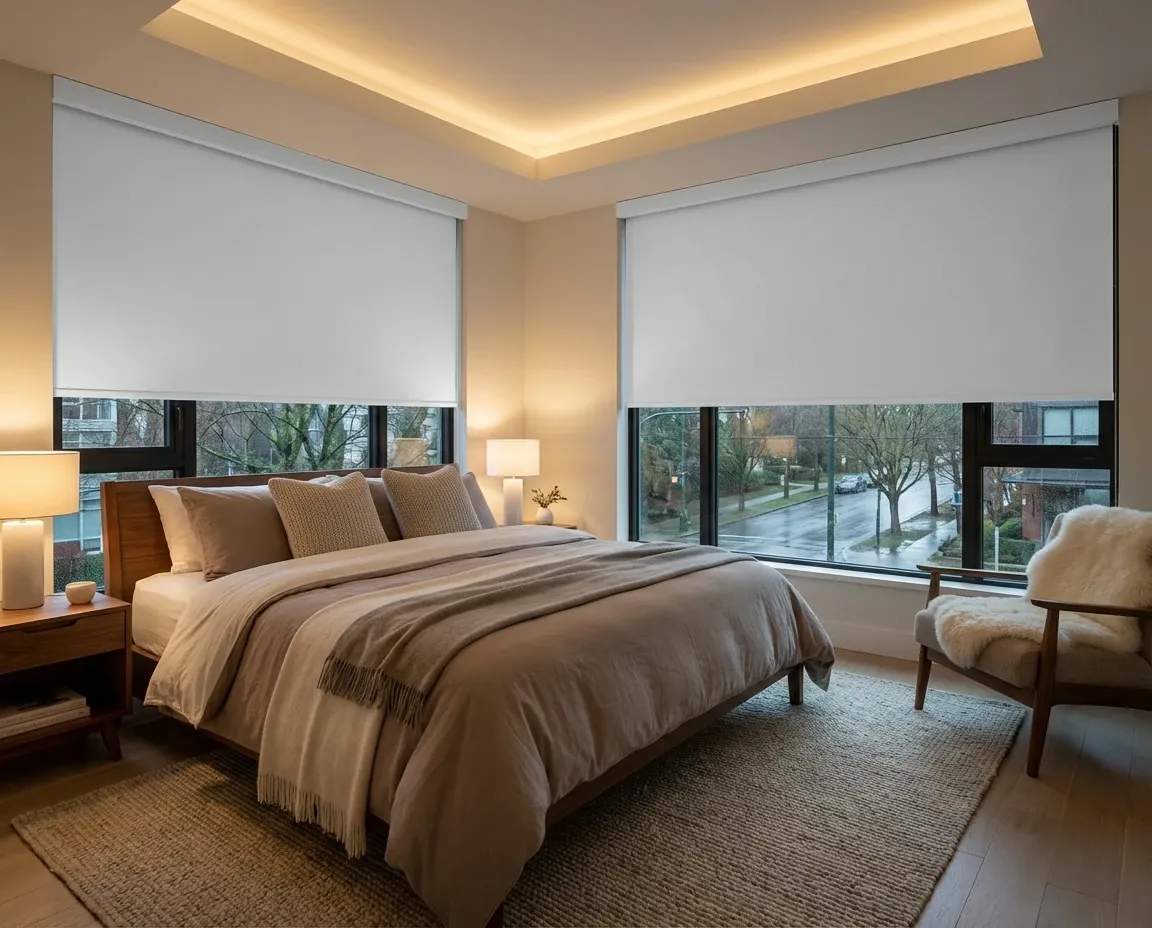
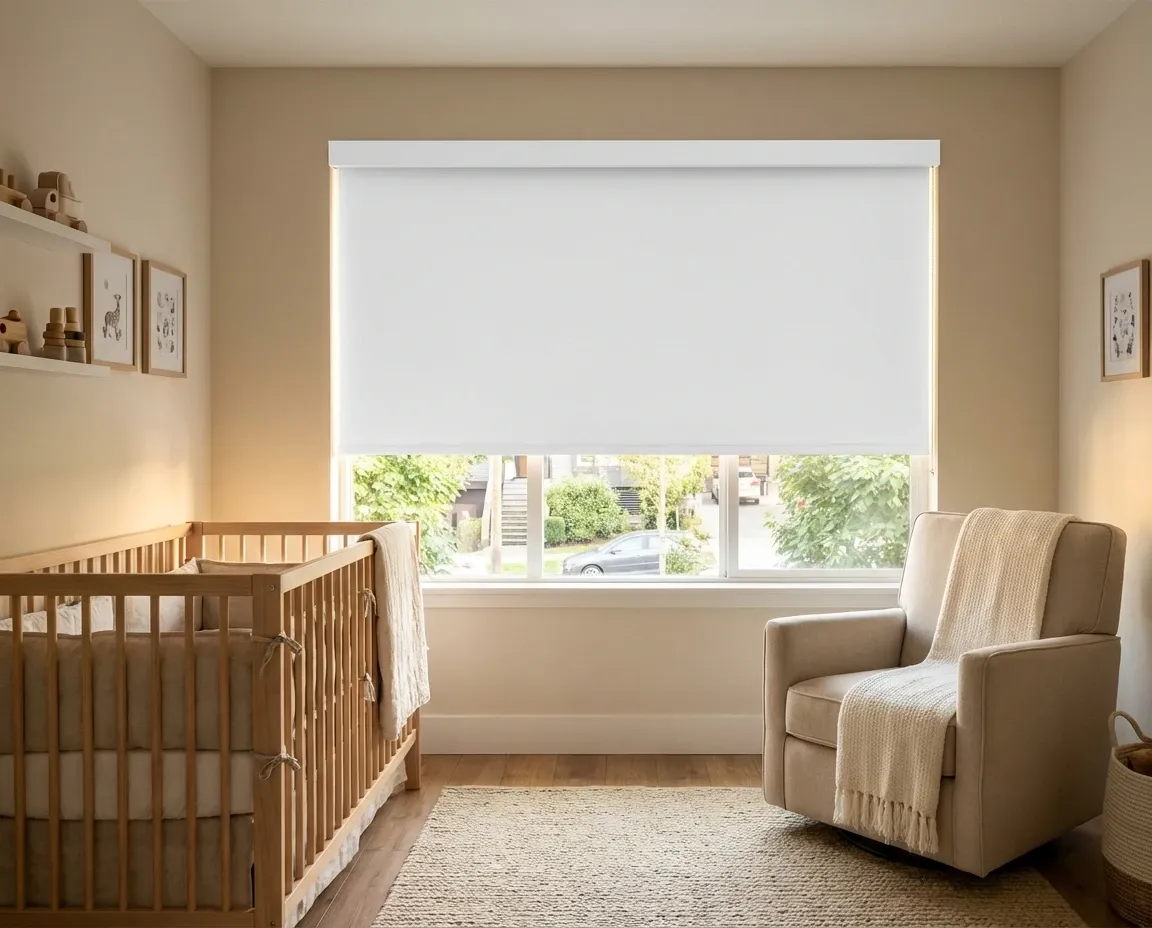
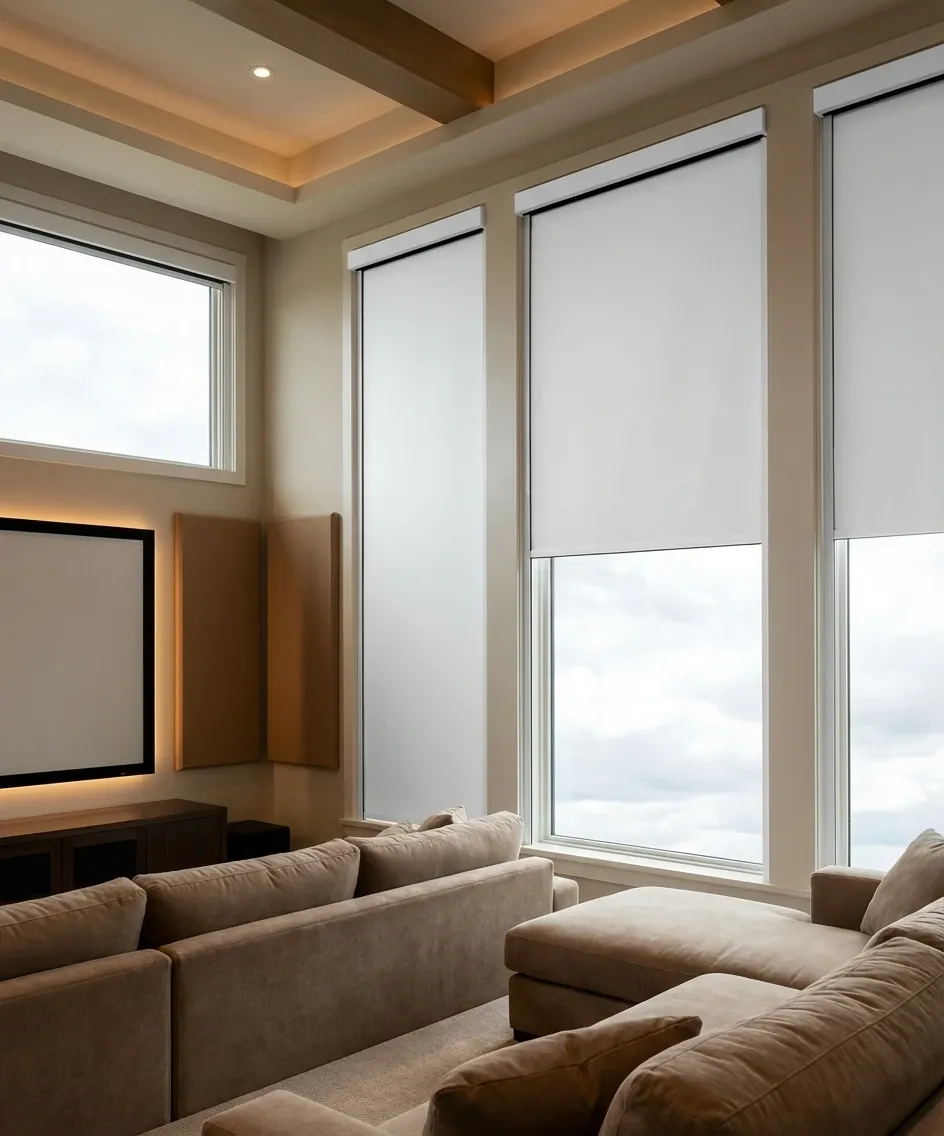
On-site measurement so the seals fit your exact opening.
Choose blackout fabric, light-block hardware, and controls.
Cut and assembled locally, then through the HT Five-Point Check.
Mounted and sealed by our crew; edges checked for leaks.
Fabric, hardware, and motor systems covered, backed by 25 years of local manufacturing. Service request system for post-install support.
Every shade is inspected before it ships: operation, function, durability, finish, and dimensional accuracy.
Select blackout fabrics carry fire-rating certifications for hospitality, healthcare, and institutional projects.
Most blackout shades on the market are opaque fabric on a standard roller. The fabric blocks light through the material, but standard brackets leave gaps at the top, bottom, and sides — so light still leaks in around the edges. That’s room darkening, not blackout. True blackout is a system: the fabric handles the light through the middle, and the hardware seals the perimeter. Side channels run down both edges and close the gap between the shade and the wall. A cassette or fascia covers the roller and the gap above it. A sealed bottomrail closes the bottom edge. Address all four edges and you get real darkness — the kind that holds a sleep schedule, supports shift workers, and lets a home theatre perform. Whether you call them blackout shades or blackout blinds, the principle is the same.
Room-darkening shades cut light by roughly 70–95% depending on the fabric and how they’re mounted, but you’ll still see a glow around the edges, especially in summer. True blackout pairs opaque fabric with light-sealing hardware to block light at every edge. If you’re sleeping through long daylight, keeping a nursery dark for naps, or building a proper theatre, go blackout. If you just want a darker room for evening TV, room darkening works and costs less. We’ll help you decide what the room actually needs.
Because blackout shades are built on our roller platform — effectively blackout roller shades — you can match hardware and controls across every room. Want solar or light-filtering fabric for the living room? You’ll find the full range on the Roller Shades page. Many homes run both: blackout in the bedrooms, solar in the living room. They’re the bedroom blinds and nursery shades we get asked for most.
Light gaps, hardware, room darkening vs true blackout, and motorization — answered directly.
Light leaks at the edges, not through the fabric. Standard brackets leave a gap between the shade and the wall where light gets in. A true blackout system closes those gaps — side channels down both sides, a cassette or fascia over the roller, and a sealed bottomrail. The fabric blocks light through the middle; the hardware seals the perimeter. If your current blackout blinds still glow around the edges, the hardware is the problem, not the fabric.
Room darkening reduces light; blackout eliminates it. Room-darkening shades cut roughly 70–95% of light depending on fabric and mounting, but you'll still see a glow around the edges. True blackout combines opaque fabric with light-sealing hardware — side channels, a cassette mount, and a sealed bottomrail — to block light at every edge. Different products, different performance, different price. If you can live with some ambient glow, room darkening is fine. If you need real darkness for sleep, shift work, or a nursery, go blackout.
Yes — nurseries are one of the most common uses. True blackout removes the light cues that cut naps short, and motorized operation removes the dangling cords that manual shades leave within a child's reach. You can also schedule the shades to darken for nap time and open after.
Yes. Blackout shades run on HT Smart Motors (rechargeable and wire-free) or Somfy automation. Schedule them to close at bedtime and open in the morning without touching a cord — the most useful setup for bedrooms and nurseries, and standard in hotel guestrooms.
Yes. Opaque fabric with side channels and a cassette mount delivers the darkest result. Use a darker fabric on the room-facing side to cut reflections off the shade — that protects screen contrast. For a dedicated theatre, pair blackout shades with dark wall finishes.
Yes. We supply blackout systems for hotel guestrooms, healthcare, and institutional projects, with fire-rated fabrics where codes require them. Multi-unit projects get phased installs, project coordination, and spec documentation through our trade team.
Blackout shades with side channels block more light than curtains because they seal against the wall at every edge. Curtains drape over the window and leave gaps at the sides and top. Shades also take less visual space, suit modern rooms, and can be motorized. You can layer curtains over shades for the look — but the shade does the light-blocking work.
We'll match you with the right blackout system for your space.
Talk to a Product SpecialistTell us your rooms and how dark you need them. We'll spec the fabric, light-block hardware, and controls, then measure and install. Free in-home measurement and quote across Metro Vancouver. Faster quote: include your window count, sizes, and whether you need solar, light-filtering, or blackout.
Request a QuoteWe also handle hotel guestrooms, healthcare, and multi-unit blackout — with a trade and vendor program for builders, designers, and property managers. Ask us.
Trade & Builder Access